
When you know a difficult conversation is coming, your first thought is often about what you are going to say. You think through the right words, prepare your explanation, and anticipate what the other person might say in return. Those things matter, but by the time you say the first sentence, you may have already shaped how the conversation will go.
You also enter the conversation with assumptions about what happened and why. Your tone can communicate frustration even when you don’t intend it to. The setting can make the conversation feel collaborative or confrontational. And if emotions rise, your response can either add to the tension or help bring the conversation back to its purpose.
Learning how to handle difficult conversations at work is an important part of effective workplace communication, but it involves more than finding the right words. It means understanding your purpose, separating facts from assumptions, considering how your message is being delivered, and knowing when to adjust your approach as the conversation develops.
In this blog, we will explore:
- Why a Difficult Conversation Starts With Purpose
- What You Bring Into the Conversation
- Why Facts Create a Better Starting Point
- How the Setting Shapes the Conversation
- Why Tone Matters as Much as the Message
- Understanding Without Always Agreeing
- How Preparation Helps You Stay Present
- Why De-escalation Starts With Your Own Response
- Building Better Judgment in Difficult Conversations
- Frequently Asked Questions About Difficult Conversations
- Continue the Conversation
Why a Difficult Conversation Starts With Purpose
Before deciding what you want to say, it helps to understand what you want the conversation to accomplish. Correcting serious behaviour requires a different approach from helping someone learn from an honest mistake. Resolving a problem with a client may require something different from addressing a disagreement with a coworker. Even when the subject is difficult, the purpose of the conversation can help determine how you approach it.
Negar, Quality Assurance & Compliance Specialist at The Acquisition Group, considers this before navigating challenging conversations in her own role.
“What is my purpose in this interaction?”
— Negar, Quality Assurance & Compliance Specialist at The Acquisition Group
Consider a manager speaking with a team member after a client complaint. If the manager enters the conversation focused only on making sure the mistake never happens again, the discussion may immediately become corrective. If the manager instead wants to understand what happened, they can first consider the impact and what needs to change. This creates room to understand the issue before deciding how to move forward.
The expectation has not changed, but the purpose of the conversation is clearer. That clarity gives you something to return to if the discussion becomes tense or moves in an unexpected direction. Without it, frustration and assumptions can easily become the focus.
That is why purpose matters before the first word is spoken. It gives the conversation direction and helps you make decisions based on what you are trying to accomplish rather than reacting to the pressure of the moment.
What You Bring Into the Conversation
We rarely enter difficult conversations with only the facts. We also bring previous experiences, expectations, frustrations, and assumptions about why something happened. Those assumptions can feel convincing when we have already spent time thinking about the situation before speaking to the other person.
Imagine a coworker misses an important deadline and does not tell you until the work is already late. You know the report was submitted two days late. You do not necessarily know why.
There is a difference between thinking the report was submitted two days late and thinking they do not respect my time. The first describes what happened. The second assigns an intention to it.
That assumption can influence your questions, your tone, and even how you interpret the person’s response. Before deciding what the other person needs to hear, it can be useful to ask yourself: What do I actually know?
Recognizing your assumptions does not mean ignoring your experience or judgment. It gives you an opportunity to separate what you observed from the meaning you attached to it. That matters because a productive conversation should not simply confirm the conclusion you reached beforehand. It should help you leave with a clearer understanding of the situation than you had when you entered it.

Why Facts Create a Better Starting Point.
Separating facts from assumptions does not remove accountability. In many cases, it can make accountability clearer because the conversation is grounded in something specific that both people can discuss.
The Situation-Behavior-Impact (SBI) approach developed by the Center for Creative Leadership follows this principle. It focuses on feedback, observable behaviour, and the impact that behaviour had rather than making assumptions about someone’s motives or personality.
Instead of saying, “You don’t take deadlines seriously,” you might say, “The report was due Monday and came in Wednesday. That meant the next stage of the project had to be pushed back.” The concern has not been softened. What has changed is the information being used to discuss it.
From there, you can ask, “Can you walk me through what happened?” Perhaps the deadline was misunderstood, another priority came up unexpectedly, or the person simply made a mistake. Their explanation may not change the impact or remove the need for accountability, but it gives you information you did not have before.
This is also where the difference between intent and impact becomes important. We can observe the impact of someone’s actions, but we cannot always know the intention behind them without asking.
For difficult conversations in the workplace, facts create a stronger starting point because they give both people something concrete to discuss. Instead of debating someone’s character or motives, the conversation can focus on what happened, why it mattered, and what needs to change moving forward.
How the Setting Shapes the Conversation
Communication begins before the main message is delivered. Where you sit, whether the conversation happens privately, how you position yourself, and even how much time you have available can influence how the interaction feels.
Negar adjusts her physical positioning depending on what a conversation requires. When someone has made an honest mistake and the goal is coaching, she may sit beside them. When the situation is more serious and requires clear accountability, sitting across from the person can establish a different tone.
Imagine a new team member has entered information incorrectly while learning a process. Sitting beside them and reviewing the process together can reinforce that the goal is to understand the mistake and help prevent it from happening again. If the same issue continues after previous conversations and clear expectations, the next discussion may need to feel more formal because the purpose has shifted from initial coaching to accountability.
Timing and privacy can have a similar effect. A sensitive conversation held in front of coworkers creates a different experience from one held privately. A discussion rushed into the few minutes before another meeting may not leave enough space for questions, clarification, or a thoughtful response.
There is no single setting that works for every difficult conversation. The better question is whether the environment supports what you are trying to accomplish. The setting is already communicating something about the conversation you are asking someone to have, which is why thinking about where and how it happens can be just as intentional as planning what you want to say.
Why Tone Matters as Much as the Message
People often focus on finding the perfect phrase when preparing for a difficult conversation. But even the right words can land poorly when the delivery does not match them.
“Your tone can either escalate a situation or defuse a situation.”
— Negar, Quality Assurance & Compliance Specialist at The Acquisition Group
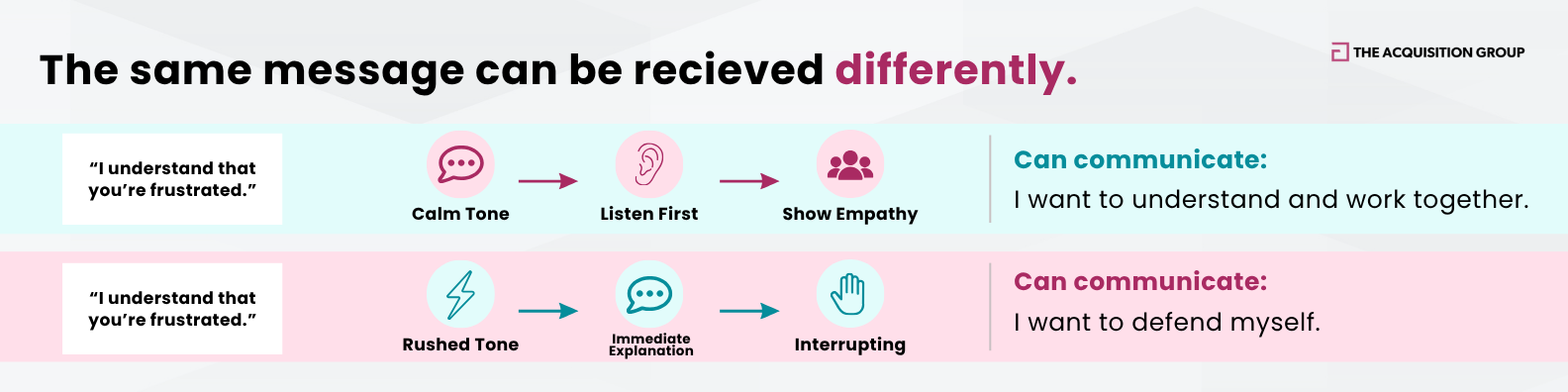
Consider a client who is frustrated because an issue has taken longer to resolve than expected. You might respond, “I understand that you’re frustrated.” Said calmly and followed by a genuine effort to understand what still needs to be resolved, the sentence acknowledges the client’s experience. Said quickly or defensively before explaining why the delay was not your fault, the same words may sound dismissive.
Being direct does not require being hostile. A steady, confident tone can communicate that an issue is serious without adding unnecessary tension. At the same time, making your delivery too casual can make an important issue seem less significant than it is.
The goal is not to soften every difficult message. Some conversations require clear feedback, boundaries, or accountability. The skill is communicating that message without allowing the delivery to create a second problem.
This is an important part of workplace communication because people respond not only to the information they receive, but also to how that information is delivered. When your tone supports the purpose of the conversation, the other person has a better chance of focusing on the issue rather than reacting primarily to the delivery.
Understanding Without Always Agreeing
Listening becomes more difficult when you disagree with what you are hearing. You may already be thinking about your response, believe important context is being left out, or worry that acknowledging the other person’s perspective will make it sound as though you agree with it.
Understanding and agreement are not the same thing.
Imagine a team member says, “I missed the deadline because I had three other urgent projects come up that week.” You can understand why their workload became difficult without deciding that missing the deadline without communicating was acceptable.
You might respond, “I understand that you had several priorities competing for your time. We still need to know when a deadline is at risk so the rest of the team can adjust. What could we do differently next time?”
Both parts of the situation can be true. The workload may have been difficult, and the lack of communication may still need to change. Listening allows you to understand the first without removing accountability for the second.
This matters because difficult conversations at work rarely happen when two people already see the situation in exactly the same way. If agreement becomes a requirement for listening, both people can spend the conversation defending their own perspective rather than understanding where the difference actually exists. A productive conversation does not always end in agreement. Sometimes progress means understanding the disagreement clearly enough to decide what needs to happen next.
How Preparation Helps You Stay Present
Preparing for a difficult conversation is not about memorizing a script or predicting every possible response. It is about understanding the situation well enough that you can stay present once the conversation begins.
Before delivering difficult feedback or an outcome, Negar reviews the important points, takes notes, considers questions that may come up, and prepares for possible defensiveness. That preparation creates confidence, but it also creates something equally valuable: room to listen.
If you already understand the important facts and know what you want the conversation to accomplish, you do not need to spend the entire interaction mentally preparing your next sentence. You can pay attention to what the other person is telling you and recognize when new information changes your understanding of the situation.
Preparation can also mean recognizing when you are not ready to continue. You may need to confirm a detail, review a policy, gather more information, or ask someone with more experience for guidance before deciding what happens next.
Being prepared means understanding what you know, recognizing what you still need to learn, and being ready to work with both. That is why preparation should create flexibility rather than a rigid script. The better prepared you are, the more attention you can give to the conversation that is happening.
Why De-escalation Starts With Your Own Response
Even a well-prepared conversation can change when emotions rise. Someone becomes frustrated, their voice gets louder, and you feel yourself becoming defensive. Without realizing it, you may begin matching their energy. A conversation that started with one problem can quickly become an argument about something else.
At that point, it can be tempting to focus on calming the other person down. But de-escalation may need to start with your own response.
“De-escalation starts with self-regulation.”
— Negar, Quality Assurance & Compliance Specialist at The Acquisition Group
Self-regulation means recognizing your emotional response before it determines what you do next. For Negar, that can sometimes mean standing and walking during a stressful phone conversation. The movement gives her enough mental space to respond rather than react. For someone else, it might mean taking a deep breath and counting to three before answering, slowing the pace of the conversation, maintaining a steady tone, or asking a question rather than immediately defending their position.
Consider a client who says, “I’ve explained this three times. Nobody is listening to me.” An instinctive response might be, “That’s not true. We’ve been trying to help you.” Even if you believe that response is accurate, the conversation has now shifted toward deciding who is right.
Another response might be, “I can hear that this has been frustrating. Let me make sure I understand what still hasn’t been resolved.” Acknowledging the frustration does not mean accepting every claim the client has made. It creates an opportunity to bring the conversation back to the problem that still needs to be solved.
You cannot always control the emotion another person brings into a conversation, but you can become more aware of your own response. Creating even a small amount of space between your reaction and what you say next can help keep a difficult conversation focused on its original purpose rather than allowing the emotion of the moment to determine where it goes.
Building Better Judgment in Difficult Conversations
There is no perfect script for how to handle difficult conversations because difficult conversations are not all the same. Some require more empathy. Some require clearer accountability. Some require more questions before a decision can be made. Many require you to move between those approaches as the conversation develops.
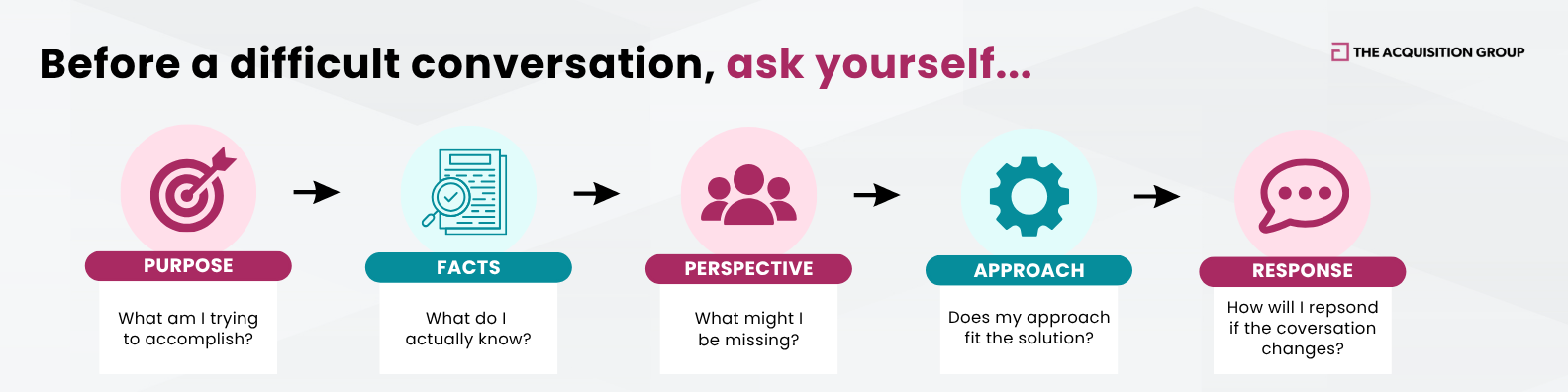
That is why becoming better at difficult conversations is about developing judgment. Before your next conversation, consider:
What am I trying to accomplish?
Be clear about the purpose before deciding how to approach the conversation.
What do I actually know?
Separate observable information from assumptions about someone’s intentions.
What might I be missing?
Leave room for questions, context, and perspectives you may not have considered.
Does my approach fit this situation?
Consider whether your tone, timing, environment, and level of directness support what you are trying to accomplish.
How will I respond if the conversation changes?
Notice when frustration or defensiveness begins influencing the way you communicate.
These questions will not make every difficult conversation easy. Their value is that they give you more ways to respond when the conversation does not go according to plan.
Over time, that judgment can help you navigate situations far beyond conflict. It can improve giving feedback at work, communicating expectations, working with different personalities, solving problems, supporting clients, and leading others. Purpose gives the conversation direction. Facts create a clearer starting point. Listening adds information. Tone and environment influence how the message is received. Preparation gives you room to adapt, and self-regulation helps you remain intentional when the conversation changes.
The goal is to become more capable when a difficult conversation happens. A productive conversation rarely comes down to finding one perfect sentence. It comes from understanding what the moment requires and being willing to adjust how you show up for it.
Frequently Asked Questions About Difficult Conversations
Why are difficult conversations important at work?
Difficult conversations allow people to address issues that might otherwise remain unresolved. They can clarify expectations, provide feedback, surface different perspectives, resolve disagreements, and determine what needs to happen next. Learning how to handle difficult conversations in the workplace can also strengthen communication skills that become increasingly useful as responsibilities grow.
How should I start a difficult conversation?
Start by identifying what you want the conversation to accomplish. Then separate what you know from what you assume and consider what information you may still need. Beginning with a clear purpose and specific observations gives both people a stronger starting point.
How can I give feedback without making someone defensive?
You cannot control how another person will respond, but you can make your feedback clearer. Focus on specific behaviours and their impact rather than making assumptions about someone’s personality or intentions. Give the other person an opportunity to explain their perspective and ask questions. This can make giving feedback at work more useful and less personal.
Does listening mean agreeing with someone?
No. Listening helps you understand another person’s perspective and gather information. You can acknowledge someone’s experience or understand their reasoning while still disagreeing with their conclusion or holding them accountable for an outcome.
What should I do if someone becomes emotional during a difficult conversation?
Start by paying attention to your own response. Maintaining a steady tone, pausing before responding, acknowledging what emotions the other person may be experiencing, and returning to the purpose of the conversation can help prevent additional escalation. If the conversation is no longer productive, it may also be appropriate to pause and return to it later.
Continue the Conversation
Interested in hearing more about navigating difficult conversations and communicating effectively when situations become challenging?
Watch the full conversation on The Acquisition Group’s YouTube channel as Negar shares practical strategies she has developed through her experience in Quality Assurance, from setting an intention and adjusting her approach, to preparing for difficult feedback and staying grounded when emotions rise.
Looking for your next opportunity? Explore careers at The Acquisition Group and discover an environment where learning and professional growth are part of the journey.
