
Career growth is often associated with experience, technical knowledge, and professional skills. While these qualities are important, they are not always what separates someone who consistently grows from someone who remains in the same place. In many cases, the difference comes down to mindset.
One mindset that has gained increasing attention in leadership and professional development is high agency. Although the term may not appear in many job descriptions, it reflects a quality that employers value across industries: the ability to take ownership at work, practice problem-solving at work, and move forward even when the path is not completely clear. The high agency concept shows up in how people approach uncertainty and act with intention.
As industries continue to evolve and roles change more quickly than ever before, this quality has become one of the most valuable traits a professional can grow from. Developing a high agency can help you navigate those changes with greater confidence, strengthen how you approach challenges, and prepare you to take on new opportunities as your career grows.
What Does High Agency Mean?
If you’re wondering “what is high agency” or searching for the meaning of high agency, here’s a simple way to think about it: the high agency definition centers on choosing to act rather than waiting for ideal conditions.
High agency is the ability to take ownership of a situation and make progress without waiting for perfect instructions or ideal circumstances.
It does not mean having all the answers, and it certainly does not mean refusing to ask for help. Instead, it means taking responsibility for understanding the problem, exploring possible solutions, and contributing to the outcome.
People with this mindset are often curious by nature. When they encounter something unfamiliar, they are willing to learn, ask thoughtful questions, and take initiative rather than remaining passive. They recognize that uncertainty is part of growth, and they view challenges as opportunities to develop new skills rather than reasons to hold back.
This matters because you will not always have a clear roadmap for every challenge you encounter at work. Learning how to explore your options and take action can help you become more resourceful, build confidence in your decisions, and prepare for greater responsibility.
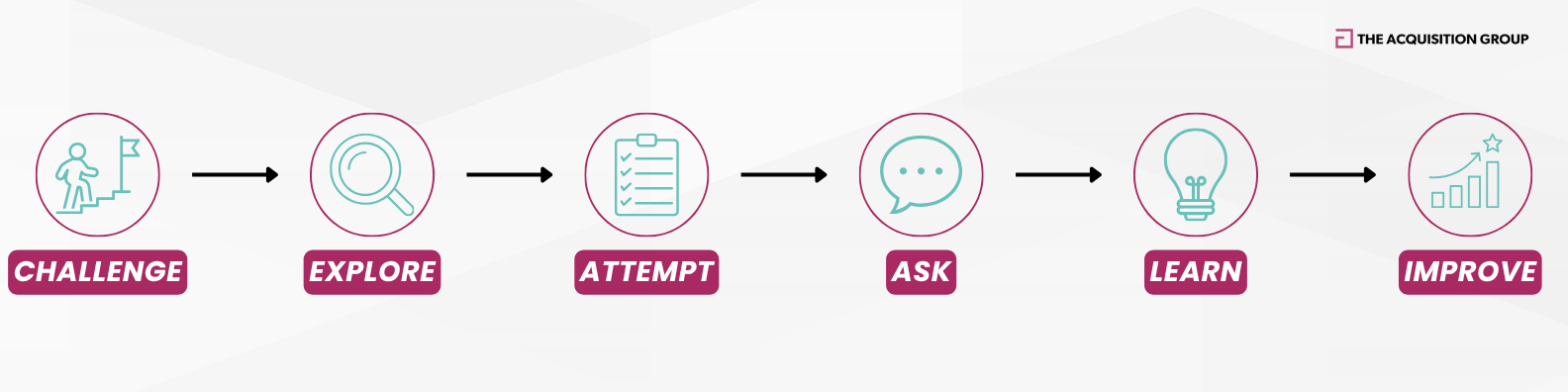
High Agency in Everyday Work
This mindset shows up in everyday workplace moments, especially when someone is faced with something unfamiliar. Here are two high agency examples:
Imagine you are asked to complete a task you have never done before.
| One Approach | A High Agency Approach |
|---|---|
| “I’ve never done this before. Can someone walk me through it?” | Review previous examples and internal resources before making a first attempt. |
| Ask for instructions immediately. | Explore the task before asking for support. |
| Ask a broad question. | Ask a specific question based on what you’ve already tried. |
For example, after reviewing the available resources, the second employee might say:
“I reviewed our previous reports and noticed two different approaches. I tried the first one, but I’m not sure if it’s the right direction. Could you take a look?”
Both employees asked for support.
The difference is that one took ownership of the learning process before expecting someone else to provide the solution.
This is a clear example of how to take initiative at work: explore available options, make a first attempt, and then ask specific questions. It also shows how to take ownership at work without waiting for perfect guidance.
This mindset helps build trust. Managers are more likely to rely on employees who take ownership of their work, follow through on commitments, and look for solutions before escalating every challenge.
Over time, these behaviours contribute to stronger relationships, increased responsibilities, and new opportunities for career growth.
That trust can lead to greater independence, more opportunities to contribute, and the chance to take on increasingly meaningful responsibilities. Rather than simply completing the work in front of you, you begin building a reputation as someone who can be relied on to think through challenges and move things forward.
Read more on: How to Give and Receive Constructive Feedback
Why High Agency Builds Better Professionals
People often associate career growth with promotions, certifications, or years of experience. While those things certainly matter, they do not always explain why some people progress more quickly than others.
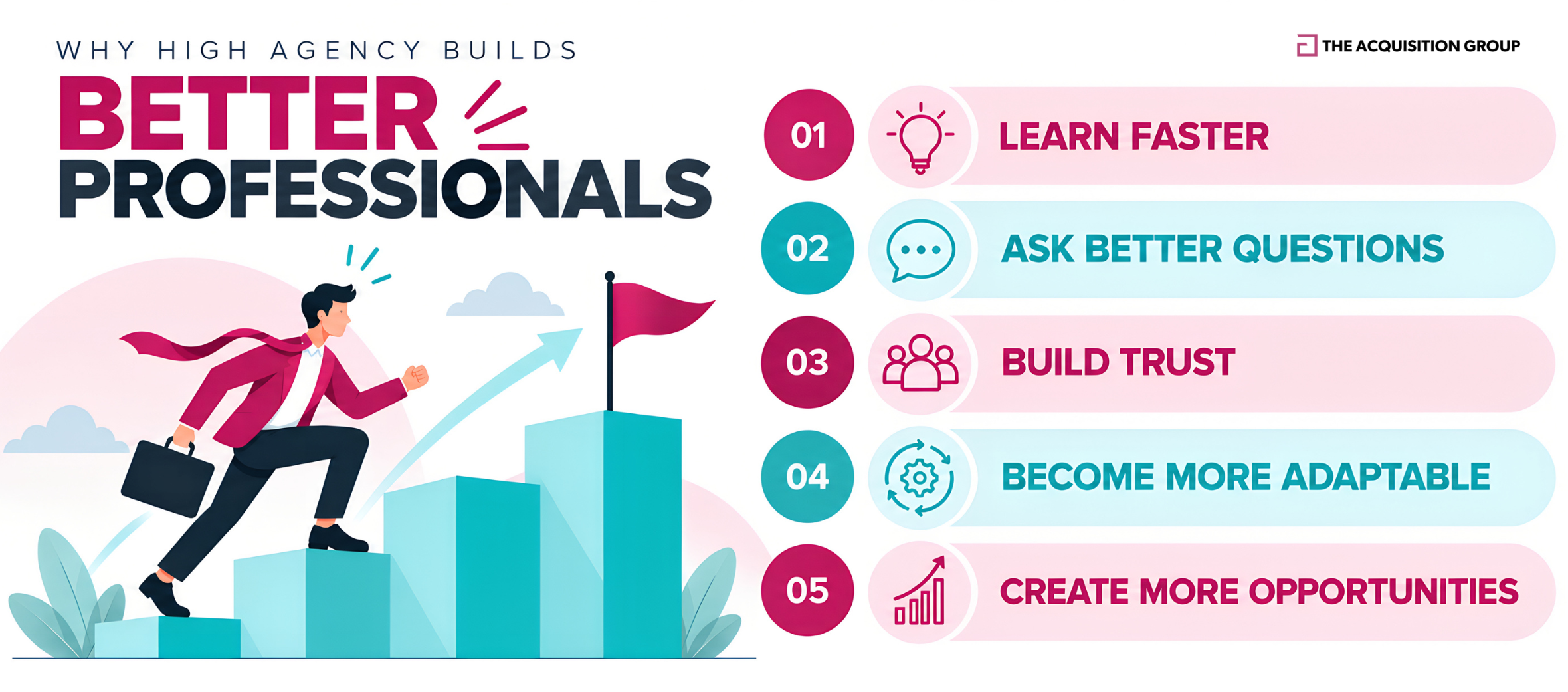
Professionals with high agency tend to:
- Learn faster because they actively engage with challenges instead of avoiding them.
- Ask better questions because they have already spent time thinking through the problem.
- Build trust because managers know they will make an honest effort before immediately looking for someone else to take over.
- Become more adaptable.
As workplaces continue to change, adaptability has become just as valuable as technical knowledge. Processes evolve, technology advances, and responsibilities shift. Someone who is willing to learn and adjust will often grow faster than someone who relies only on what they already know. Harvard Business Review describes learning agility as the ability to learn from experience and apply that learning successfully in new situations.
That adaptability in the workplace becomes a durable advantage, helping you stay effective when expectations change, learn new skills with greater confidence, and continue progressing as your role evolves.
Developing High Agency
Like communication or leadership, high agency is something that develops over time.
If you’re asking how to develop high agency, it often begins by changing one simple habit:
Before asking for the answer, ask yourself whether you have explored the problem first.
Consider asking:
- Have I reviewed available resources?
- Have I looked at previous examples?
- Have I considered more than one possible solution?
- Can I explain what I have already tried?
These small actions make collaboration more meaningful because you are contributing to the conversation rather than relying on someone else to do all the thinking.
Over time, this approach can help you become a stronger problem-solver and a more confident contributor. Instead of feeling stuck when you encounter something unfamiliar, you develop a repeatable way to assess the situation, take a first step, and ask for support when it will be most useful.
Understanding the broader meaning of agency — our capacity to choose and act — can also clarify the high agency concept in practice.
Frequently Asked Questions About High Agency
What is “high agency”?
High agency is a mindset of taking ownership and making progress even when instructions aren’t perfect or the path isn’t fully clear. It doesn’t mean having all the answers; it means actively understanding the problem, exploring solutions, learning as you go, and contributing to the outcome.
People with this mindset are curious, ask thoughtful questions, and treat uncertainty as an opportunity to grow.
Does high agency mean doing everything alone or never asking for help?
No. This mindset includes asking for help—but only after you’ve made an honest effort.
Instead of saying “I’ve never done this—tell me how,” someone who practices it reviews examples, tries an approach, and then asks a specific question like, “I tried X based on our previous reports—can you confirm if that’s the right direction?” It’s about initiative first, then targeted collaboration.
What does high agency look like in everyday work?
It shows up when you face something unfamiliar. You scan internal resources, study past work, make a first attempt, and then seek feedback with clear context.
This approach signals ownership, reduces back-and-forth, and helps teammates assist you effectively. Over time, consistently following through and looking for solutions builds trust and leads to greater responsibility.
How does high agency impact career growth?
It accelerates learning, improves the quality of your questions, and builds managerial trust because you try before escalating.
Most importantly, it makes you adaptable—an edge in fast-changing workplaces where processes, tools, and roles evolve. That adaptability becomes a durable advantage beyond years of experience or certifications alone, reinforcing adaptability in the workplace.
How can I develop high agency?
Build the habit of exploring before asking. Start by asking yourself:
- Have I reviewed available resources?
- Have I looked at previous examples?
- Have I considered more than one possible solution?
- Can I explain what I’ve already tried?
These small steps make collaboration more meaningful and signal ownership. To go further, watch our High Agency video on YouTube and consider roles at The Acquisition Group if you want an environment that values curiosity, ownership, continuous learning, and leadership development.
Continue the Conversation
Interested in learning more about high agency and how it can support your career growth?
Watch our High Agency video for more practical insights from one of our leaders on how to take initiative at work, approach problem-solving, and develop a mindset that supports professional growth.
Ready to Put High Agency Into Practice?
Join The Acquisition Group and build your career in an environment that values curiosity, ownership, continuous learning, and leadership development.
